 MDMB-PINACA for sale
MDMB-4en-PINACA is a new designer drug designed for research and forensic applications.
Toxicological and physiological properties of MDMB-4en-PINACA have not been studied.
Storage conditions: in a cool and dry place. Storage time: up to 2 years subject to proper storage conditions.
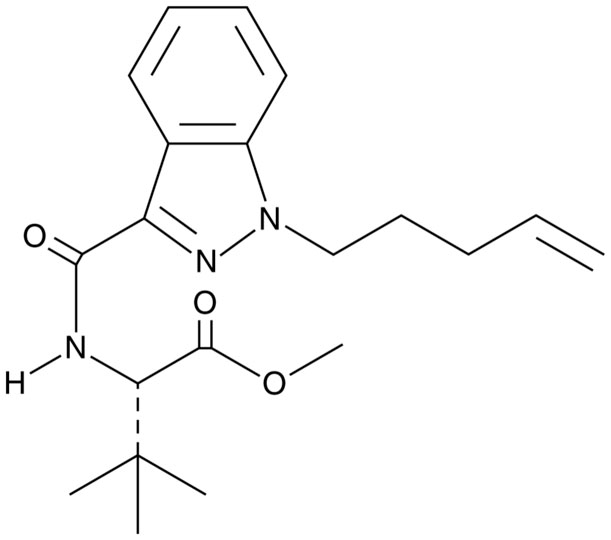
| Synonyms | MDMB-4en-PINACA |
|---|---|
| IUPAC | N-(1-carbamoyl-2,2-dimethylpropyl)-1-(pent-4-enyl)-1H-indazole-3-carboxamide |
| Formula | C19H26N4O2 |
| Molecular weight | 342.44 |
| CAS | |
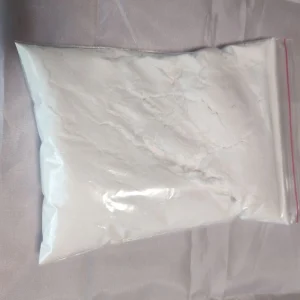
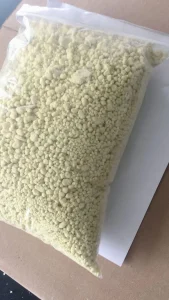
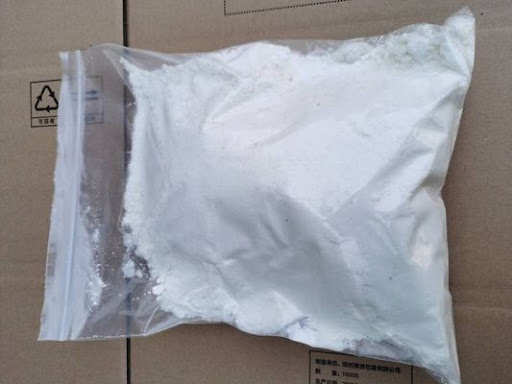
| Appearance | powder |
| Purity | ≥98% |
Price:
MDMB-4en-PINACA 10g 90 $ Add to cart
MDMB-4en-PINACA 50g 165 $ Add to cart
MDMB-4en-PINACA 100g 260 $ Add to cart
MDMB-4en-PINACA 500g 670 $ Add to cart Free shipping!
MDMB-4en-PINACA 1 kg 1200 $ Add to cart Free shipping!
MDMB-4en-PINACA 5 kg 2400 $ Add to cart Free shipping!
MDMB-4en-PINACA 10 kg 3700 $ Add to cart Free shipping!
-Choose your favorite products from Chem Logix, and you are guaranteed excellent quality at the best price.
-Envelopes are sent 24 hours after payment. Delivery time 3-4 business days. 100% delivery speed throughout Europe.
MDMB-PINACA for sale
MDMB-PINACA is a synthetic cannabinoid of the indazole-3-carboxamide class, characterized by its N-pentyl chain, indazole core, and a methyl (S)-3,3-dimethyl-2-butanoate (tert-leucinate) linked group. [REFS-1, REFS-2] It functions as a potent agonist of the cannabinoid type 1 (CB1) receptor and is primarily utilized in research and forensic applications as an analytical reference standard. Its specific structure, lacking the common fluorination or tail-chain unsaturation seen in close analogs, makes it a critical baseline compound for comparative pharmacology and metabolism studies.
Research Fit
MDMB-PINACA Substitution Risks
Substituting MDMB-PINACA with its close analogs, such as the fluorinated 5F-MDMB-PINACA (5F-ADB) or the unsaturated MDMB-4en-PINACA, is inadvisable for reproducible research due to significant, structure-dependent functional differences. Minor modifications to the pentyl tail, such as fluorination, are known to alter lipophilicity, which can affect blood-brain barrier penetration and receptor interaction kinetics. [1] Furthermore, these compounds are subject to rapid and extensive metabolism, primarily through ester hydrolysis. [2] The rate and products of this degradation can vary between analogs, making them non-interchangeable in assays where compound stability and metabolite activity are critical variables. For controlled studies, specifying the exact analog is essential to ensure target engagement and metabolic profile consistency.
Substitution Risk
References
- [1] Cannaert, A., et al. “In vitro cannabinoid receptor 1 activity of substituted synthetic cannabinoid receptor agonists: N-alkyl chain versus N-fluoroalkyl chain.” *Drug Testing and Analysis* 12.8 (2020): 1130-1139.
- [2] Wagmann, L., et al. “In vitro and in vivo metabolism of the synthetic cannabinoid MDMB-4en-PINACA and its detection in human urine samples.” *Forensic Toxicology* 39.1 (2021): 111-124.
MDMB-PINACA for sale
Potency Baseline: Saturated vs. Unsaturated Analog
MDMB-PINACA serves as the saturated pentyl-chain baseline for a family of highly potent analogs. The introduction of a terminal double bond in the tail, creating MDMB-4en-PINACA, results in exceptionally high CB1 receptor potency. In a cAMP accumulation assay, MDMB-4en-PINACA demonstrated a half-maximal effective concentration (EC50) of 0.33 nM. [1] This establishes that even subtle changes to the tail’s saturation state can dramatically impact functional activity, making the selection of the specific saturated compound, MDMB-PINACA, a critical variable for achieving predictable and comparatively lower, yet still potent, receptor modulation.
| Evidence Dimension | CB1 Receptor Functional Potency (cAMP accumulation) |
| Target Compound Data | Not directly measured in cited study; serves as the saturated baseline for comparison. |
| Comparator Or Baseline | MDMB-4en-PINACA: EC50 = 0.33 nM |
| Quantified Difference | The unsaturated analog exhibits sub-nanomolar potency, highlighting the functional impact of the tail structure. |
| Conditions | In vitro cAMP accumulation assay in cells expressing human CB1 receptors. |
For researchers investigating structure-activity relationships, procuring the specific saturated analog MDMB-PINACA is essential for establishing a baseline against which unsaturated or fluorinated analogs are compared.
Metabolic Instability: Ester Hydrolysis
A critical procurement consideration for MDMB-PINACA and its analogs is their inherent instability in biological samples. The closely related and widely studied 5F-MDMB-PINACA (5F-ADB) degrades completely to its corresponding 3,3-dimethylbutanoic acid metabolite in whole blood within 24 hours at room temperature and within 7 days under refrigeration (4°C). [1] In contrast, the metabolite itself is stable under all tested storage conditions. This rapid, non-enzymatic hydrolysis of the methyl ester is a class-wide property. Therefore, researchers procuring MDMB-PINACA must account for this degradation in experimental design, sample handling, and storage to ensure accurate quantification of the parent compound.
| Evidence Dimension | Stability in Whole Blood |
| Target Compound Data | Expected to be unstable based on class behavior. |
| Comparator Or Baseline | 5F-MDMB-PINACA: >99% degradation after 24h at room temp; >99% degradation after 7 days at 4°C. Its primary metabolite is stable. |
| Quantified Difference | The parent compound is highly unstable in biological matrices, while its primary ester hydrolysis metabolite is stable. |
| Conditions | Compound stored in fortified whole blood at room temperature, 4°C, and -20°C. |
This evidence directly impacts procurement and experimental protocols; buyers must choose between the unstable parent compound for specific studies or the stable primary metabolite for others, and must implement strict, cold-chain handling procedures for the parent.
Potency Improvement over APINACA
The procurement of MDMB-PINACA is justified when seeking significantly higher potency than first-generation indazole cannabinoids like APINACA (AKB48). The structural change from APINACA’s N-adamantyl group to MDMB-PINACA’s tert-leucinate methyl ester group dramatically increases CB1 receptor agonist activity. APINACA displays a CB1 binding affinity (Ki) of 3.24 nM and a functional EC50 of 142 nM. [1] While a direct EC50 value for MDMB-PINACA is not available in the same study, its close analogs like 5F-MDMB-PINACA and MDMB-4en-PINACA are full agonists with sub-nanomolar to low-nanomolar EC50 values, indicating a potency increase of at least one to two orders of magnitude over APINACA. [2] This makes MDMB-PINACA a more suitable tool for applications requiring potent CB1 activation at low concentrations.
| Evidence Dimension | CB1 Receptor Binding Affinity (Ki) and Functional Potency (EC50) |
| Target Compound Data | Potency is orders of magnitude higher than APINACA, inferred from close analogs. |
| Comparator Or Baseline | APINACA (AKB48): Ki = 3.24 nM; EC50 = 142 nM |
| Quantified Difference | Estimated >100-fold increase in functional potency compared to the APINACA benchmark. |
| Conditions | In vitro cannabinoid receptor binding and functional assays. |
This demonstrates a clear, quantitative leap in potency over older benchmark compounds, justifying the selection of MDMB-PINACA for research requiring high-efficacy CB1 agonism.
MDMB-PINACA Applications
SAR Reference Standard
MDMB-PINACA is the appropriate choice for establishing a non-fluorinated, saturated-tail baseline in SAR studies. Its high potency allows for clear differentiation when comparing the functional effects of minor structural modifications, such as the introduction of a fluorine atom (as in 5F-MDMB-PINACA) or a double bond (as in MDMB-4en-PINACA), on CB1 receptor activation. [1]
Metabolism Assay Substrate
Given the known class-wide instability of the methyl ester group, MDMB-PINACA serves as a valuable substrate for metabolism studies using platforms like human liver microsomes. These experiments can elucidate its specific metabolic pathways and identify unique metabolites, which is critical for developing forensic detection methods and understanding its pharmacokinetic profile relative to its analogs. [2]
Certified Reference Material
High-purity MDMB-PINACA is essential for the development, validation, and quality control of analytical methods (e.g., LC-MS/MS, GC-MS) in forensic and clinical toxicology laboratories. Its use ensures the accurate identification and quantification of this specific compound, distinguishing it from a growing list of structurally similar synthetic cannabinoids in complex biological and seized material matrices.
References
- [1] World Health Organization. Critical Review Report: MDMB-4en-PINACA. 43rd Meeting of the Expert Committee on Drug Dependence, 2020.
- [2] Hess, C., et al. “Evaluation of Synthetic Cannabinoid Metabolites in Human Blood in the Absence of Parent Compounds: A Stability Assessment.” *Journal of Analytical Toxicology* 45.1 (2021): 65-74.